

Back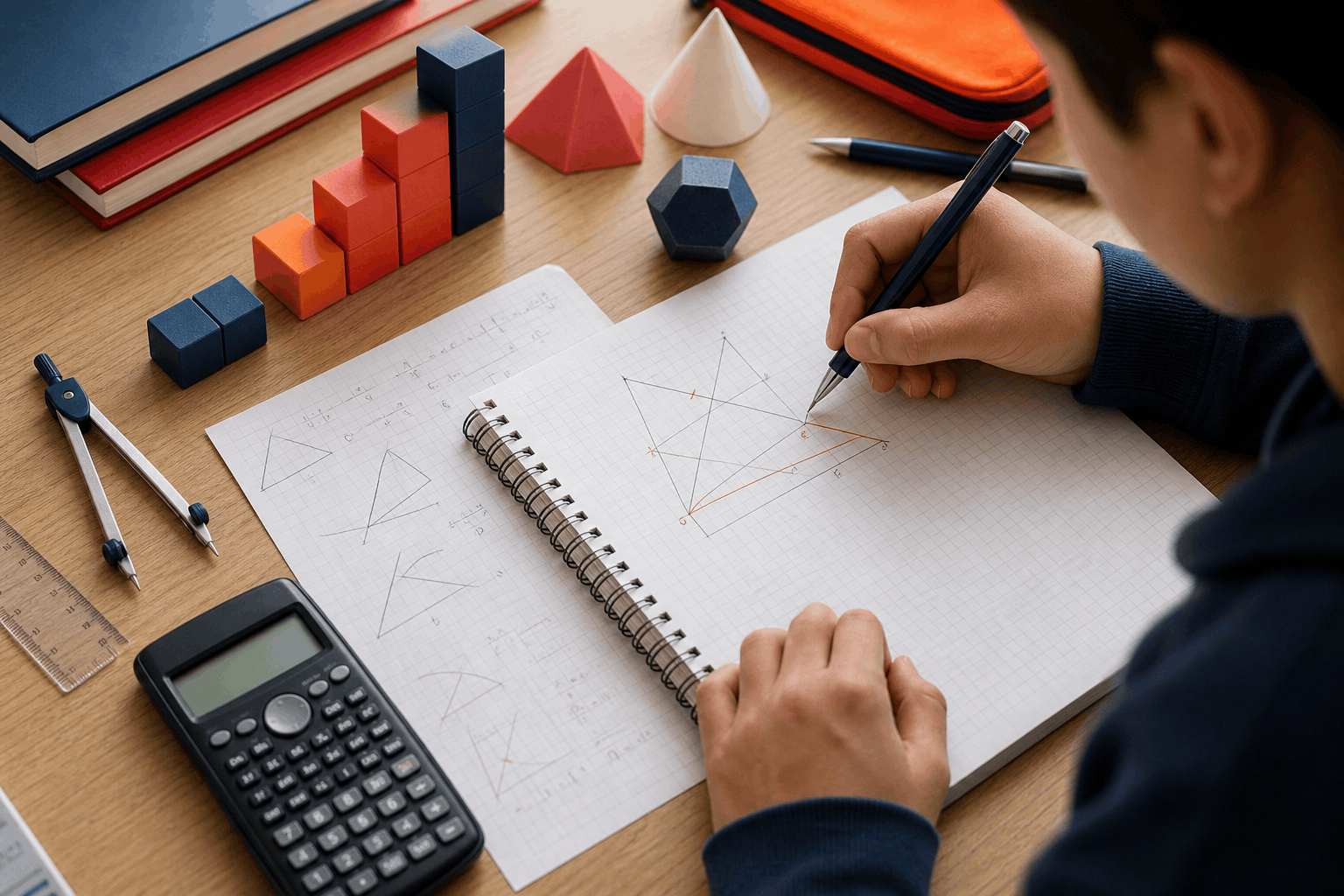
Maths Problem-Solving Techniques That Work for Exams
A repeatable, heuristics-based approach to unfamiliar maths questions — under real exam time pressure.
In the exam hall, the hardest questions are rarely the ones testing a formula a student has forgotten. They are the unfamiliar ones — the questions dressed up in a context the student has never seen. A reliable problem-solving process is what turns that moment of panic into a plan.
Rushing into calculation is the most common mistake. First, read the question twice and put it in your own words: What is given? What is being asked? Underlining the key information and the exact quantity required prevents the careless errors that cost easy marks.
A model, diagram, or table makes an abstract problem concrete. Bar models, part-whole diagrams, and simple sketches reveal relationships that are invisible in a wall of text. Many questions that look impossible become obvious the moment they are drawn.
Working backwards, guess-and-check, looking for a pattern, or simplifying with smaller numbers — these are tools, and part of the skill is picking one and trying it rather than freezing. If the first approach stalls, a trained student switches strategies instead of staring at the page.
Before moving on, ask whether the answer is reasonable. A speed of 900 km/h for a cyclist, or a negative number of people, is a signal that something slipped. A ten-second sanity check catches mistakes that would otherwise cost full marks.
Practising this sequence on varied questions makes it automatic. Under exam pressure, students do not rise to the occasion — they fall back on their training. A dependable process is the training worth building.